


Understanding how to wire a 4-wire AC motor can seem daunting, especially if you’re new to working with electrical systems. However, with a clear diagram and some basic instructions, the process becomes much more manageable. In this guide, we will walk you through the wiring process of a 4-wire AC motor, highlighting the key components such as capacitors and fan motors.
Basics of AC Motor Wiring
Before diving into the specifics of wiring a 4-wire AC motor, it’s essential to understand some basic principles of AC motor wiring. An AC motor converts electrical energy into mechanical energy using electromagnetic induction. This means it uses alternating current (AC) to produce a rotating magnetic field, which then rotates the motor’s rotor.
Fundamental Concepts of AC Motors
AC motors are widely used in various applications due to their efficiency and reliability. The core principle behind these motors is electromagnetic induction, where alternating current in the stator windings generates a magnetic field. This rotating field interacts with the rotor, causing it to turn. Understanding this interaction is crucial for adequate wiring and troubleshooting.
Types of AC Motors
There are primarily two types of AC motors: single-phase and three-phase motors. Single-phase motors are commonly used in household appliances and smaller equipment, while three-phase motors are prevalent in industrial settings due to their superior efficiency and power. Each type has its wiring requirements, particularly when incorporating features like capacitors.
Electrical Safety Precautions
Working with electricity requires strict adherence to safety protocols. Before starting any wiring project, ensure the power supply is disconnected to prevent accidents. Use insulated tools, wear rubber gloves, and be aware of your surroundings. Understanding the importance of grounding and circuit protection will help prevent electrical shocks and equipment damage.
Key Components of AC Motors
Stator: The stationary part of the motor that generates a rotating magnetic field. The stator consists of winding coils that, when energized, create the magnetic field necessary for rotor movement. Proper insulation and securing of the stator windings are essential for efficient motor operation.
Rotor: The rotating part that turns when influenced by the magnetic field. The rotor is typically made of laminated steel and is placed inside the stator. Its design can vary, but its primary function is to convert electrical energy into mechanical motion.
Capacitor: Often used in single-phase AC motors to create a phase shift for starting and running the motor efficiently. Capacitors store electrical energy temporarily and release it to provide an additional phase or boost to the motor, aiding in smoother starting and operation.
Wiring a 4 Wire AC Motor
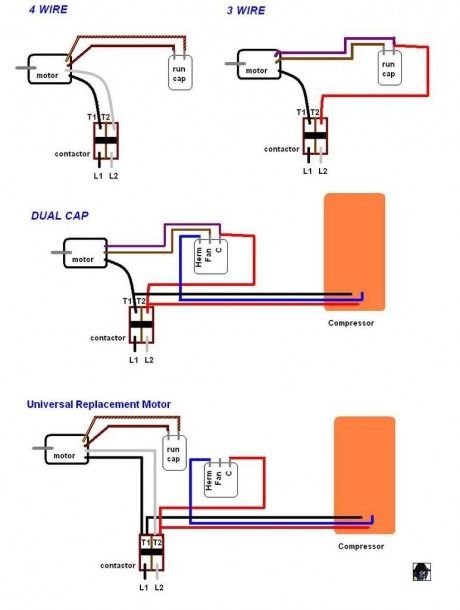
Wiring a 4-wire AC motor involves connecting the wires to the appropriate terminals. Generally, these wires are color-coded to simplify the process. Here’s an essential guide on how to go about it:
Color Coding and Connections
Black Wire: This is typically the live or “hot” wire. It connects to the power source. This wire is critical as it carries the voltage required to operate the motor. Ensure it is adequately insulated and connected to avoid short circuits.
White Wire: Often, the neutral wire completes the electrical circuit. It provides a return path for the current. The neutral wire should be securely fastened to its terminal to maintain a stable circuit.
Red Wire: Used as a secondary live wire in some motor connections. In specific setups, the red wire may facilitate additional functionalities like speed control or directional changes. Verify its purpose according to the motor’s manual.
Green or Bare Wire: This is the ground wire, which is essential for safety. Grounding helps in dissipating excess electrical charges, protecting both the equipment and operator from electrical hazards.
Step-by-Step Wiring Process
Identify the Wires: Before making any connections, identify each wire’s function using the motor’s wiring diagram. Check for any labels or color codes that indicate their purpose. Cross-reference with the motor’s manual for accuracy.
Connect the Live Wire: Connect the black wire to the live terminal on the motor. This wire carries the electrical current from the power source. Ensure the connection is tight and secure to maintain a stable power flow.
Connect the Neutral Wire: Attach the white wire to the neutral terminal. This wire completes the circuit and allows the current to return to the power source. Double-check that the connection is firm to avoid intermittent issues.
Secondary Live Connection: If applicable, connect the red wire to the secondary live terminal. This may not be necessary for all motors. Ensure compatibility with your specific motor model and its intended application.
Ground the Motor: Finally, connect the green or bare wire to the motor’s ground terminal. This ensures safety by preventing electrical shock. Make sure the ground connection is robust and complies with local electrical codes.
Tools and Materials Required
Having the right tools and materials is crucial for a successful wiring job. Essential tools include wire strippers, screwdrivers, a multimeter, and electrical tape. Use wire connectors and terminal blocks to ensure secure connections. Always use wires with the appropriate gauge for the motor’s current requirements to prevent overheating.
Incorporating a Capacitor in the Wiring
Many 4-wire AC motors use a capacitor to improve starting performance and efficiency. The capacitor creates a phase shift in the electrical current, providing the necessary torque for the motor to start.
Capacitor Wiring Diagram
Locate the Capacitor Terminals: Identify the capacitor terminals on your motor. These are usually marked on the motor’s wiring diagram. Understanding the labeling and schematic symbols is crucial for correct installation.
Connect the Capacitor: Wire the capacitor between the start winding and the power supply. This typically involves connecting one terminal of the capacitor to the live wire and the other to the start winding. Ensure the capacitor is rated for the motor’s voltage and capacitance requirements.
Secure Connections: Ensure all connections are secure to prevent any interruptions in the current flow. Loose connections can lead to sparking and component failure. Use a multimeter to verify continuity and proper resistance values.
Selecting the Right Capacitor
Choosing the correct capacitor is essential for motor performance. Capacitors are rated in microfarads (μF) and should match the motor’s specifications. A capacitor with too low a capacitance might not provide enough starting torque, while one with too high a capacitance can cause overheating.
Testing and Maintenance
Regular testing of the capacitor ensures it is functioning correctly. Use a multimeter to measure the capacitance and check for any signs of leakage or bulging. Replace faulty capacitors promptly to avoid motor performance issues. Periodic maintenance includes inspecting connections and cleaning dust and debris from the motor assembly.
Wiring an AC Fan Motor
Wiring an AC fan motor follows a similar process to wiring other AC motors, with slight variations depending on the model and application.
Common Fan Motor Wiring Diagram
Black Wire: Power input (live wire). This wire supplies the necessary voltage to operate the fan motor. Ensure it is connected to a compatible power source.
White Wire: Neutral. The neutral wire completes the electrical circuit. Proper connection is essential for balanced operation.
Red or Blue Wire: Often used for speed control or as a second live wire. This wire may connect to a speed controller or switch. Follow the manufacturer’s guidelines for proper installation.
Green Wire: Ground. Grounding is crucial for safety and should be connected to a reliable ground point.
Detailed Wiring Steps
Connect the Power Input: Attach the black wire to the power source, ensuring it corresponds to the motor’s voltage rating. Verify the voltage compatibility to prevent damage.
Neutral Connection: Connect the white wire to the neutral terminal to complete the circuit. Ensure a tight connection for consistent performance.
Speed Control Wiring: If your fan motor has speed control, connect the red or blue wire accordingly. Use a multimeter to test the connections and ensure they are functioning as expected.
Grounding the Motor: Ensure the green wire is connected to the ground terminal for safety. Grounding helps protect against electrical faults and prolongs motor lifespan.
Troubleshooting Fan Motor Issues
Fan motors, like other AC motors, can encounter specific problems. If the motor doesn’t start, check the connections and the capacitor if applicable. For overheating issues, ensure the fan is not obstructed, and the voltage is correct. Regular maintenance, including cleaning and inspecting for wear, can prevent many common problems.
Troubleshooting Common Wiring Issues
Even with a clear diagram and instructions, wiring issues can occur. Here are some common problems and solutions:
Motor Won’t Start
Check Connections: Ensure all wires are securely connected and in the correct terminals. Loose or incorrect connections are the most common cause of starting issues. Double-check the wiring against the diagram.
Inspect the Capacitor: A faulty capacitor can prevent the motor from starting. Test the capacitor with a multimeter and replace it if necessary. Look for physical signs of damage, such as bulging or leaking.
Verify Power Supply: Ensure that the power supply is active and delivering the correct voltage. Use a multimeter to measure voltage at the motor terminals.
Motor Overheats
Verify Voltage: Ensure the motor is receiving the correct voltage. Overvoltage can cause excessive heat, leading to motor damage. Use a voltage meter to check the power supply.
Check for Obstructions: Make sure no obstructions are causing the motor to work harder than necessary. Inspect the rotor and stator for foreign objects or debris.
Cooling Mechanisms: Ensure any built-in cooling mechanisms, such as fans or heat sinks, are functioning correctly. Clean them regularly to maintain efficiency.
Inconsistent Performance
Inspect Wiring: Look for any loose connections or damaged wires. Loose wires can cause intermittent issues. Secure all connections firmly and replace any damaged wires.
Test the Capacitor: As with starting issues, a faulty capacitor can cause performance problems. Measure its capacitance and replace it if necessary. Regular testing can preemptively solve many performance issues.
Check for Wear and Tear: Inspect the motor for signs of wear, such as worn bearings or brushes. Regular maintenance and timely replacement of worn parts help maintain consistent performance.
Conclusion
With the right tools and knowledge, wiring a 4-wire AC motor can be straightforward. By understanding the basic components and following a structured wiring diagram, you can ensure your motor runs efficiently and safely. Always remember to take necessary precautions, such as turning off the power before starting any wiring work, and consult the motor’s manual for specific guidance.
Whether you’re wiring a fan motor or a general-purpose AC motor, having a clear understanding of the wiring process will help you achieve successful and reliable installations. Regular maintenance and troubleshooting will ensure long-term performance and safety, making your electrical projects a success.


